 Stampario
Florida fire extinguisher service tag requirements
In Florida, every time an extinguisher is serviced it gets a new tag, pressure-sensitive label or decal (Fla. Admin. Code 69A-21.241). It shows "Do Not Remove", the extinguisher’s serial number, the full name of the person who did the service (initials are not acceptable), their permit number, the type of service and of extinguisher, the month and year by perforation, and the company’s name, street address and phone on the front center.
What the tag must show
- "Do Not Remove"
- Serial number of the extinguisher
- Full name of the person who performed the service (initials are not acceptable)
- That person’s permit number
- Type of service performed and type of extinguisher
- Month and year of service, shown by perforation
- Company name, street address and phone number on the front center
Size and format
At least 2½ × 5¼ inches and no larger than 3 × 5¾ inches, in any colour. A tie-on tag, a pressure-sensitive label or a decal are all allowed. A new one goes on at every service.
The 6-year collar
Whenever an extinguisher is opened for internal service, it gets a verification-of-service collar as described in NFPA 10. The collar carries no advertising or other information.
How Stampario fills it
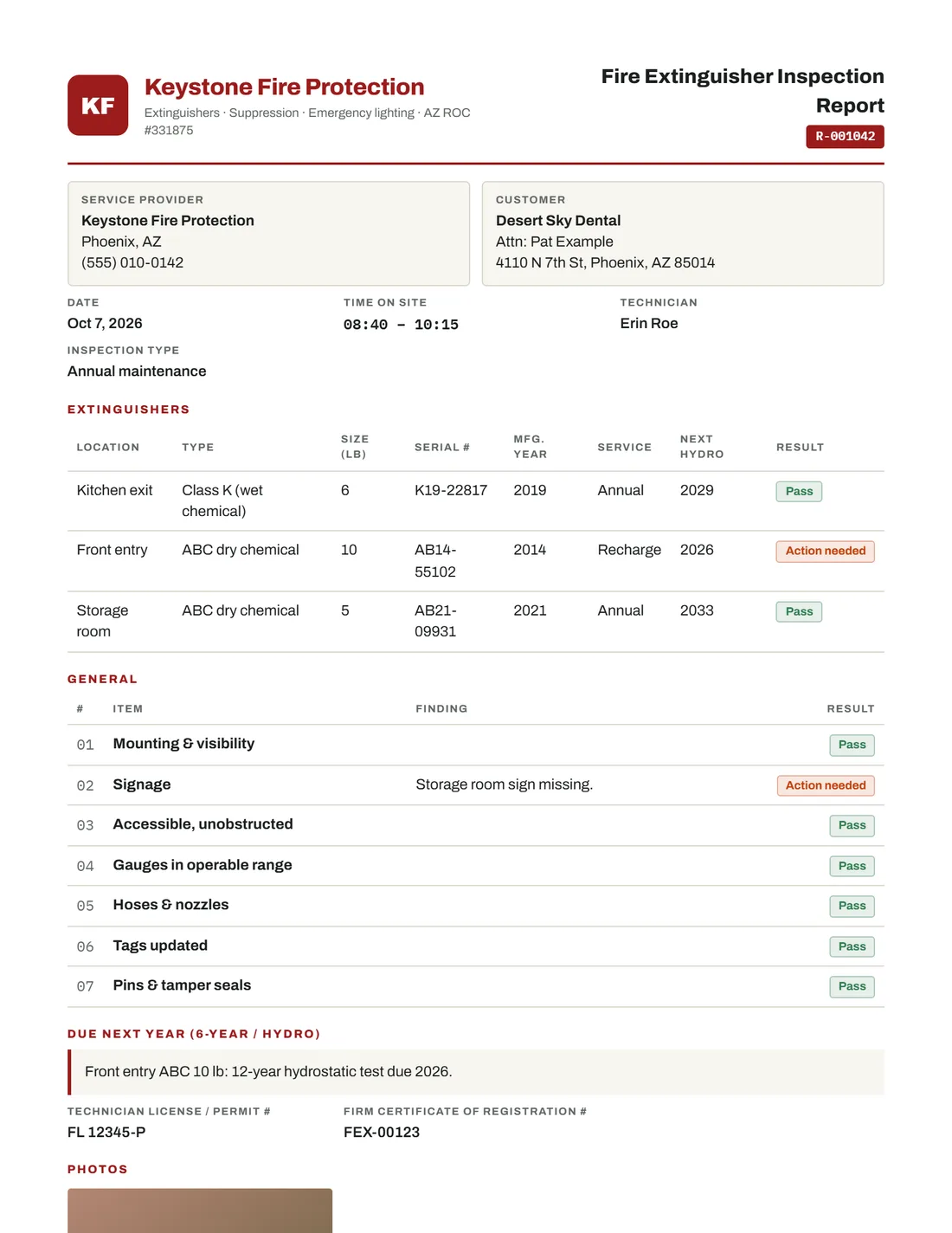
- The extinguisher report has one row per unit with the serial number, type and service performed: the values each tag needs.
- The technician’s full name and permit number print on the report.
- The customer gets the whole inventory in one signed PDF, and next year’s inspection lands on your call list.
Common questions
Can the tag be a sticker?
Yes. The rule allows a tie-on tag, a pressure-sensitive label or a decal, as long as it carries all the required information.
Why does the report matter if the tag is on the unit?
The tag shows one unit’s last service. The report gives the owner, the fire inspector and you the full list of units, results and what is due next year.
Sources
Codes change by edition and the authority having jurisdiction (your fire marshal, water purveyor or state agency) decides which rules apply. This page is general information, not legal advice.