 Stampario
Texas backflow test report, TCEQ-20700 layout
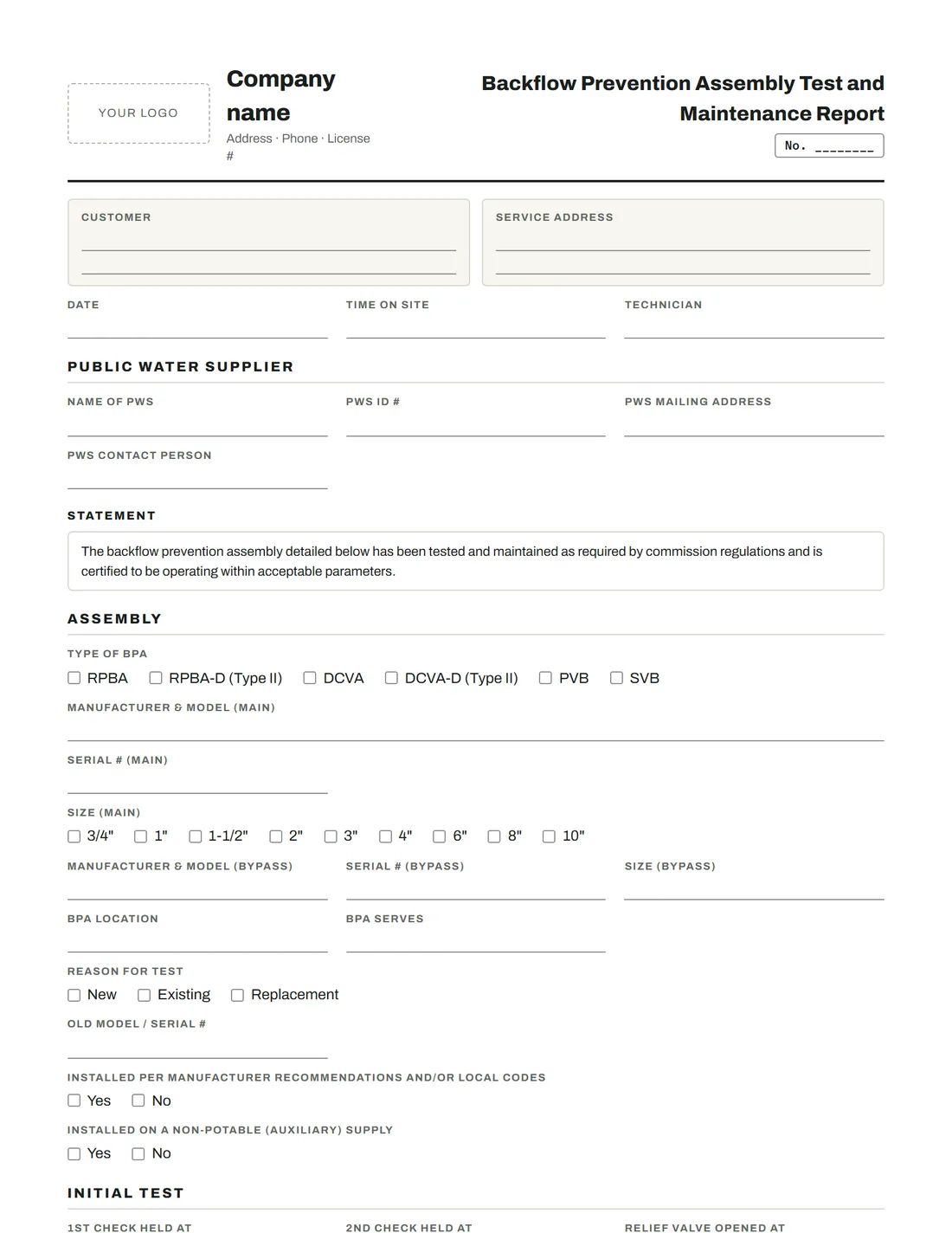
Every public water system in Texas uses the same test and maintenance report, TCEQ-20700. This layout has its fields in the same order and with the same wording, so you can fill it at the assembly and print it for your signature.
Rather fill it on your phone? Try it free in Stampario: the customer signs on screen and gets the PDF before you leave.
What the layout records
The water system’s name, PWS ID, mailing address and contact. Then the assembly: type (RPBA, RPBA-D, DCVA, DCVA-D, PVB or SVB), manufacturer, model, serial and size for the main and the bypass, location, what it serves and the reason for the test. Two yes/no questions follow: installed per manufacturer and local code, and installed on a non-potable supply. The readings come next (check valves, relief valve, Type II bypass check, air inlet), then repairs and the test after repair. It ends with the gauge (potable or non-potable, serial, date tested for accuracy), your BPAT license number and its expiration date.
How filing works in Texas
TCEQ’s instructions allow the form to be filled electronically during the test. The water system still needs a printed original signed by the licensed tester, unless it uses electronic records approved by TCEQ, and many Texas utilities take reports through a portal. Ask your water system what it accepts. Either way, the customer gets the same report by email and you keep the history by address.
Keep the official form when it is required
This is a working copy built from TCEQ-20700’s published field list, not an official TCEQ document. If your water system asks for the TCEQ form itself, file that and give the customer this copy.
- 01Name of PWS
- 02PWS ID #
- 03PWS mailing address
- 04PWS contact person
- 05Type of BPA
- 06Manufacturer & model (main)
- 07Serial # (main)
- 08Size (main)
- 09Manufacturer & model (bypass)
- 10Serial # (bypass)
- 11Size (bypass)
- 12BPA location
- 13BPA serves
- 14Reason for test
- 15Old model / serial #
- 16Installed per manufacturer recommendations and/or local codes
- 17Installed on a non-potable (auxiliary) supply
- 181st check held at
- 192nd check held at
- 20Relief valve opened at
- 21Type II bypass check held at
- 22Air inlet opened at
- 23Check valve held at
- 241st check
- 252nd check
- 26Bypass check
- 27Relief valve did not open
- 28Air inlet fully opened
- 29Initial test
- 30Repairs and materials used (main)
- 31Repairs and materials used (bypass)
- 321st check held at
- 332nd check held at
- 34Relief valve opened at
- 35Air inlet opened at
- 36Check valve held at
- 37Test after repair
- 38Gauge used on
- 39Make / model
- 40Serial #
- 41Date tested for accuracy
- 42Remarks
- 43BPAT license #
- 44License expiration date
Plus customer, service address, date, time on site, technician, photos and signatures.
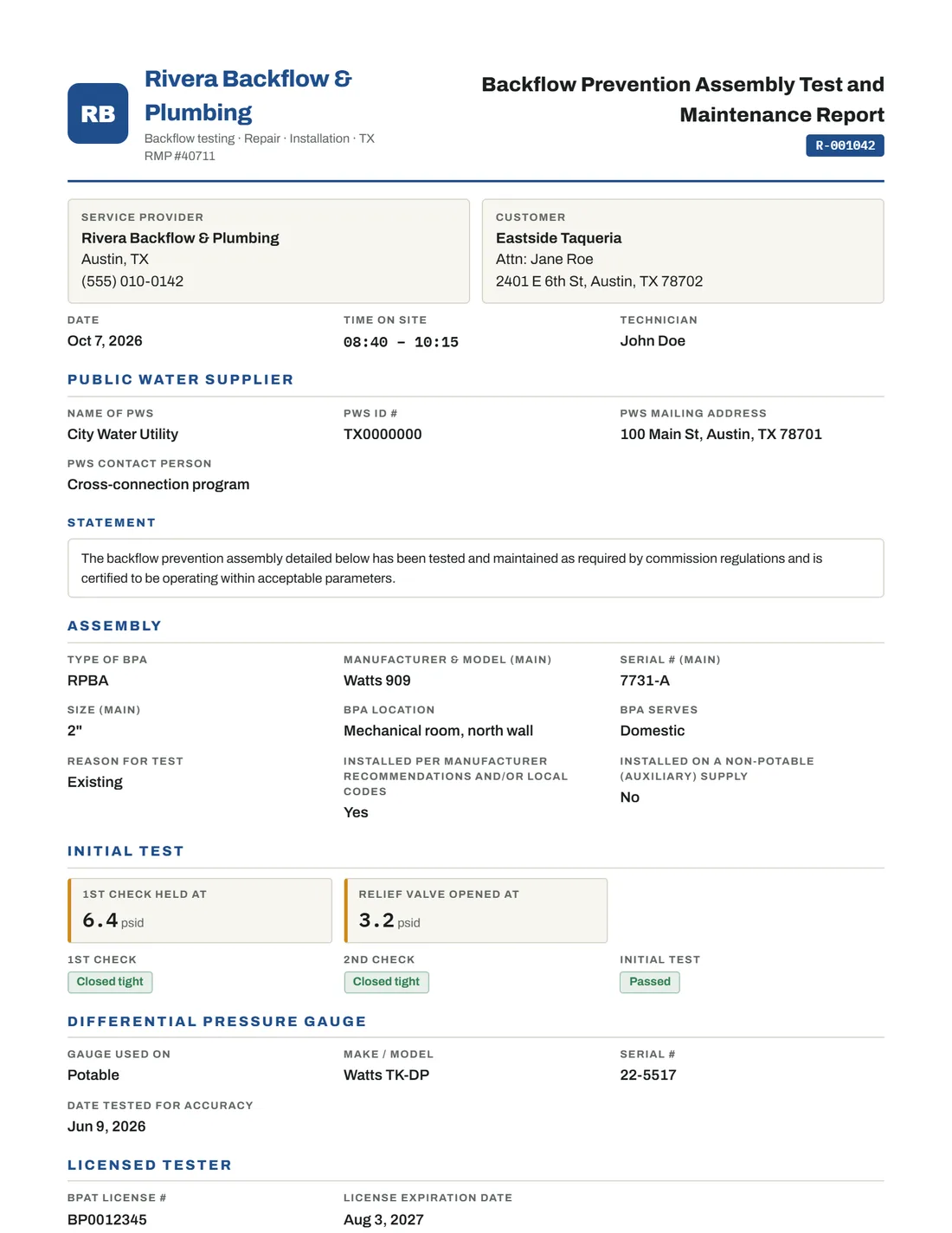
The same form, finished on site
- Last visit’s equipment details are already filled in
- Readings, photos and signatures on one PDF with your logo
- The customer gets it by email before you leave
- The next due date lands on your call list
About this template
Is this the official TCEQ form?
No. It has the same fields in the same order, and it isn’t produced or endorsed by TCEQ. Each water system decides what it accepts, so check with yours.
Does it handle Type II assemblies with a bypass?
Yes. Choosing RPBA-D or DCVA-D adds the bypass manufacturer, model, serial and size, the bypass check reading and the bypass repair line.
How long do I keep test records in Texas?
The form’s footnote cites at least three years (30 TAC §290.46). Reports in the app are kept and searchable by address and assembly.
Fill the texas tceq-20700 backflow test report on your phone
Free for 5 reports a month. No card. Your logo on every PDF from the first one.